Most drivers never think about their driveshaft until something goes wrong. It spins quietly under the truck, doing its job mile after mile, and it only gets attention once a vibration shows up or a U-joint fails on the road. But driveshaft balance affects far more than comfort. An out-of-balance shaft puts stress on your transmission, your differential, and every bearing in between, and that stress adds up faster than most people realize.
In this article, we will explain what a driveshaft actually does in simple terms. We will cover the warning signs of an imbalanced shaft, including vibration, U-joint wear, and damage to other drivetrain parts. We will walk through how driveshaft repair and balancing actually works, then explain why Madison Spring brought driveshaft repair in-house at our Lodi location in 2026 and what that means for owner-operators and fleet managers across South Central Wisconsin. Finally, we will cover how to know when a repair makes sense versus when it is time to replace the shaft entirely.
By the end, you will understand why this often-overlooked part deserves more attention than it usually gets.
What Does a Driveshaft Actually Do?
A driveshaft is the long metal tube that connects your transmission to your rear axle. Its job sounds simple. It transfers power from the engine, through the transmission, and down to the wheels so the truck actually moves. But because it spins at high speed every time the truck is in motion, it has to be built and balanced with real precision.
U-joints sit at each end of the driveshaft and allow it to flex slightly as the suspension moves up and down. That flexibility is necessary, but it also means the shaft has to stay balanced and properly aligned or the whole system starts working against itself. Think of it like a car tire that is out of balance. At low speeds you might not notice, but the faster you go, the worse the shake gets. A driveshaft works the same way, except instead of shaking your steering wheel, it shakes your entire drivetrain.
What Are the Signs of an Imbalanced Driveshaft?
An imbalanced driveshaft usually announces itself gradually, and catching the early signs can save you from a much bigger repair down the road.
Does Your Truck Vibrate More at Highway Speed?
This is the most common symptom. A shaft that is out of balance often feels fine at low speeds but starts shaking noticeably once you hit highway speed. The vibration can show up in the floor, the seat, or even the steering wheel, and it tends to get worse the longer you drive.
Are Your U-Joints Wearing Out Faster Than They Should?
An imbalanced shaft puts uneven stress on the U-joints at each end. Instead of wearing evenly over time, they wear out faster and can start to feel loose or make a clicking or clunking noise, especially when shifting between drive and reverse.
Is Your Transmission or Differential Showing Premature Damage?
This is the part most drivers do not connect back to the driveshaft. Constant vibration transfers stress into the transmission output shaft and the differential pinion bearing. Over time, that stress can lead to premature wear or failure in parts that are far more expensive to fix than the driveshaft itself. Catching an imbalance early protects the rest of your drivetrain.
How Does Driveshaft Repair and Balancing Actually Work?

When a shaft comes in for service, the first step is a full inspection. A technician checks the U-joints, the slip yoke, and the tube itself for wear, rust, or physical damage. Any worn components get replaced before balancing even starts, because there is no point in balancing a shaft that still has a bad U-joint.
Once the shaft is mechanically sound, it goes onto a balancing machine. The machine spins the shaft at operating speed and measures exactly where the imbalance is coming from. Small weights get added to the shaft at precise points until it spins true, with no more vibration or wobble. This process brings the shaft back to factory-level precision, which means smoother power delivery and a lot less stress on everything downstream of it.
Why Did Madison Spring Bring Driveshaft Repair In-House at Lodi?
In 2026, Madison Spring brought driveshaft repair and balancing fully in-house at our Lodi location. Before this, a driveshaft problem often meant sending the shaft out to a specialty shop and waiting on turnaround time that was completely out of our control. That wait time added directly to a customer’s downtime, on top of whatever the actual repair took.
Now, our Lodi technicians can diagnose, repair, and balance driveshafts on-site, start to finish. That means faster turnaround for owner-operators who cannot afford a truck sitting idle, and more predictable scheduling for fleet managers trying to plan maintenance around routes and deliveries. For South Central Wisconsin customers, it also means one less part of the repair process that depends on an outside shop’s schedule. We control the timeline, which means we can give customers a straight answer about when their truck will be back on the road.
Should You Repair or Replace a Driveshaft?
Not every driveshaft problem calls for the same fix, and knowing the difference can save you money.
When Does a Repair Make Sense?
If the tube itself is straight and undamaged, and the problem comes down to worn U-joints, a bad slip yoke, or an imbalance that developed over time, a repair is usually the right call. Rebuilding and balancing an existing shaft costs less than a full replacement and gets the truck back to proper operating condition.
When Should You Replace the Shaft Instead?
If the tube is bent, cracked, or has been damaged in an impact, repair is no longer an option. A bent shaft cannot be balanced correctly no matter how much time you put into it, and running one is a safety risk. In those cases, a full replacement is the safer and more cost-effective choice in the long run, since a bent shaft that fails on the road can cause serious damage to the transmission and differential as well.
When in Doubt, What Should You Do?
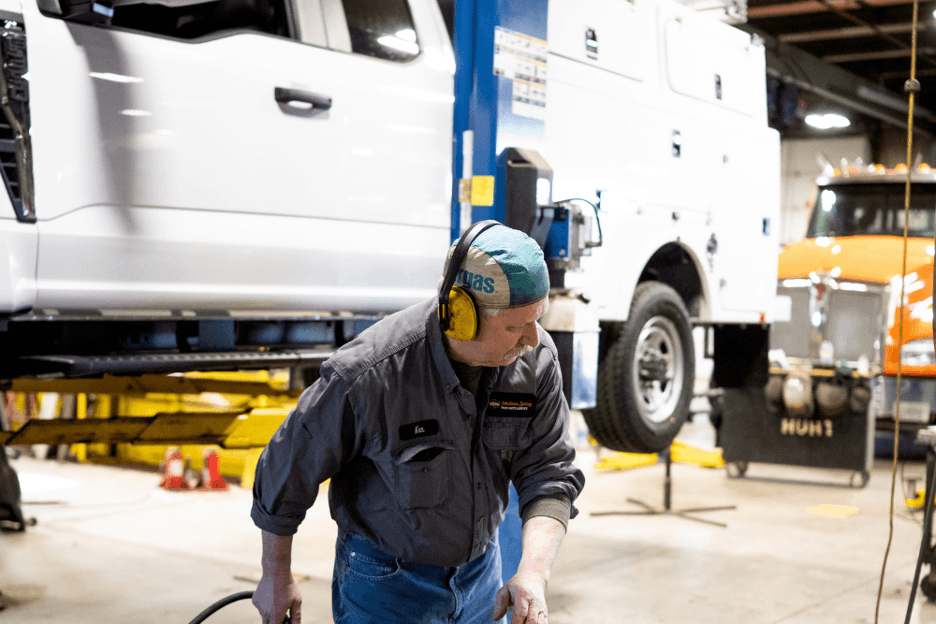
If you are not sure which category your truck falls into, a quick inspection will tell you. Our technicians can look at the shaft, check the U-joints, and let you know honestly whether a repair or replacement makes more sense for your situation and your budget.
Ready to Get Your Driveshaft Checked?
If your truck has developed a vibration at highway speed or you have noticed U-joint wear creeping up faster than it should, do not wait for it to turn into a transmission or differential problem. Schedule a driveshaft inspection or repair with our Lodi and Madison teams. With driveshaft repair and balancing now handled in-house, we can get South Central Wisconsin trucks back on the road faster than ever. Contact us today to schedule your appointment.